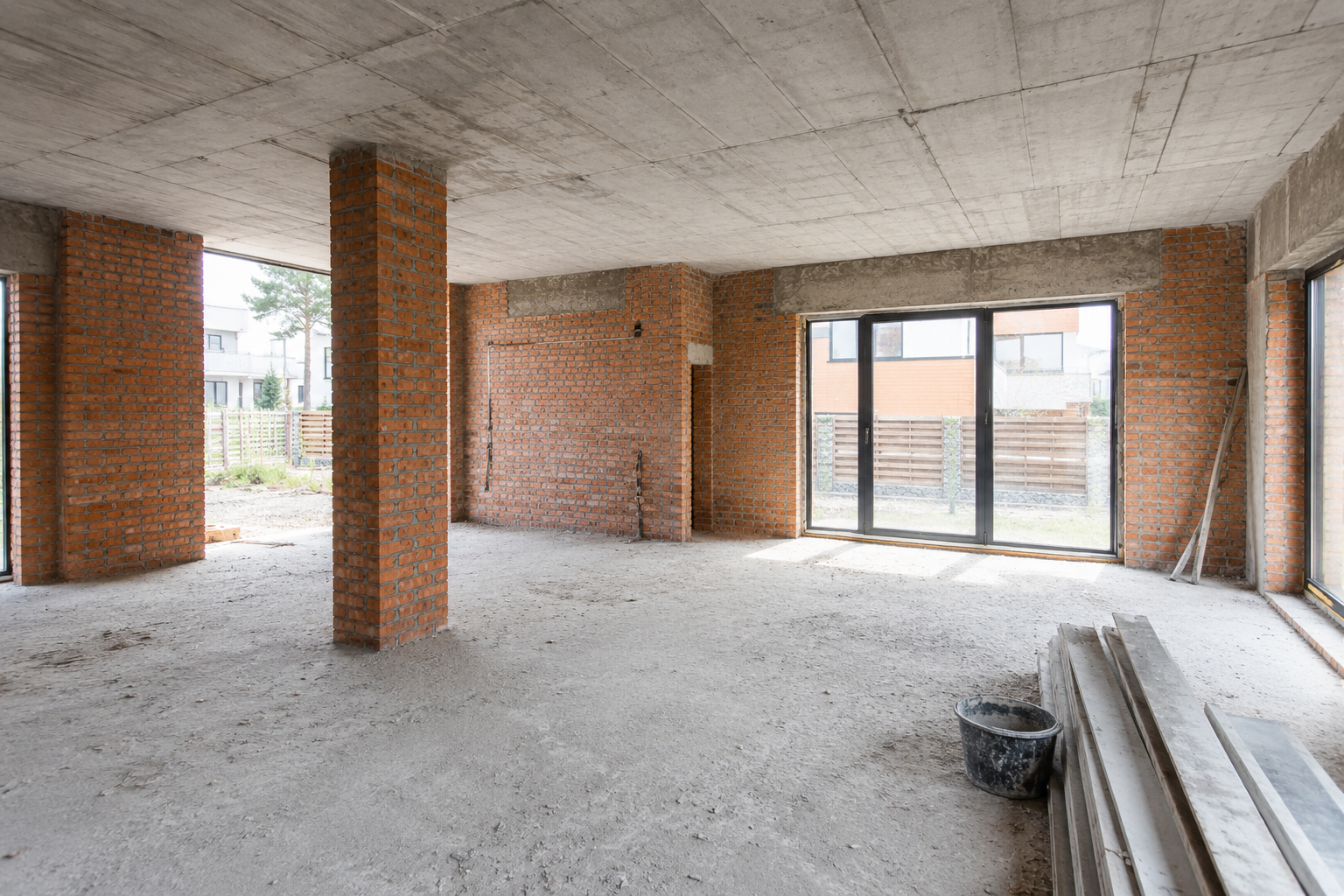
One of the biggest hidden risks when buying property in the Murcia region is not the price or the paperwork on ownership, but planning. A property can look perfect, have a clean title and a willing seller, and still carry a building that was never legalised, an extension that was never authorised, or a house sitting on land where it should never have been built. In the worst cases that can mean fines, an inability to connect utilities or get a mortgage, and even a demolition order. This guide explains what to look for and how to check before you commit.
What counts as an illegal or unlicensed build?
“Illegal” covers a range of situations, and they are not all equally serious. The main ones are:
Building without a licence. A house, or part of one, put up with no planning permission at all.
Building that does not match the licence. Very common: a property built or extended beyond what was authorised, so part of it is unlicensed even though the original had permission.
Unregistered extensions and additions. A converted garage, an extra bedroom, a closed-in terrace, a pool or an outbuilding that exists in reality but appears on neither the Land Registry nor the cadastre.
Building on the wrong class of land. The most serious category. A dwelling built on land that is not designated for housing, particularly protected rural land, may never have been legal and may never be capable of being legalised.
The reason this matters is that a property can be sold to you with any of these problems baked in, and the consequences then become yours.
Why it matters to you as the buyer
An illegal or unlicensed build is not just a paperwork nuisance. It can mean:
- A demolition risk. In serious cases the authorities can order the unauthorised part, or the whole building, to be pulled down, at the owner’s cost.
- Fines. Building without a licence is a planning offence, and the penalties can run to a substantial percentage of the value of the works.
- No mortgage. Lenders generally will not finance a property whose build is not properly legalised, which also shrinks your future pool of buyers.
- Utility and registration problems. You can struggle to connect services legally or to register the true state of the property.
- Lost value. A property that cannot be legalised is worth far less and is much harder to sell on.
The land classification question comes first
Before anything else, you need to know what class of land the property sits on, because it changes everything.
On urban land, an unauthorised build is a problem that can often be resolved or has limited enforcement exposure over time. On non-developable or rural land, the picture is very different, and on protected rural land it can be severe. Murcia has many houses built over the years on rural land where housing was never permitted, and buyers are frequently reassured that “everyone around here is the same” or that the problem has “gone away with time.” That reassurance is often wrong, for the reason explained next.
“Prescribed” does not mean “legal”
This is the single most misunderstood point, so it is worth being precise.
Under Murcia’s planning law, the authorities generally have a limited window, commonly four years, to act against a planning breach on ordinary land. Sellers often present this as meaning the build has become legal once that time has passed. It has not. Two things are true instead.
First, even where the enforcement window has closed, the building does not become fully legal; it typically sits in an “out-of-planning” status, which carries real limitations. You may be unable to extend it, carry out significant works, or treat it as a normal, fully legal home.
Second, and critically, on protected rural land the enforcement window does not close at all. There is no time limit. A house built illegally on protected land can, in principle, face enforcement and a demolition order at any time, however many years have passed and however many neighbours are in the same position. This is exactly the situation buyers most need protecting from, and exactly the one that sellers are least likely to spell out.
How to check before you buy
You cannot tell any of this by looking at the property, and you cannot tell it from the Land Registry alone, because the registry records ownership and charges, not planning legality. Proper checks involve several sources cross-checked against each other:
The town hall planning position. The key step is obtaining a planning certificate or report from the local town hall. This shows how the land is classified, whether the property has the relevant licences, and crucially whether there is any open enforcement file against it.
The registry versus the cadastre versus reality. The Land Registry description, the cadastre record and what is physically on the ground should all match. Differences, an unregistered pool, extra square metres, a building the records do not show, are red flags that something was done without authorisation.
The occupation and habitation documents. Whether the property holds a first occupation licence and is certified as a legal, habitable dwelling.
A professional survey where needed. For rural properties or where anything looks off, a surveyor or architect can compare what was licensed against what was actually built.
Running these together is the heart of proper legal due diligence, and it is work we build into our Property Conveyancing service precisely so these problems surface before you are committed, not after.
Can an illegal build be legalised?
Sometimes, yes, and sometimes no. Where a build simply lacks paperwork but does not conflict with the planning rules for that land, it may be possible to regularise it. Murcia also has regimes that recognise certain pre-existing buildings that do not fully conform, allowing them to continue with limitations. But where a building sits on land where housing is genuinely not permitted, particularly protected land, legalisation may be impossible, and no amount of time will fix it. Knowing which situation you are dealing with, before you sign, is the whole point of checking. Our Property Law service covers this kind of planning and title issue.
How we can help
The reason illegal builds catch people out is that the property itself gives nothing away, and the seller may not even know, or may not say. At PALS we carry out the planning and title checks for buyers across the Murcia region, obtain the town hall position, compare the records against the reality, and tell you clearly whether what you are buying is legal, legalisable, or a risk to walk away from. It is a small cost against the price of inheriting someone else’s planning problem.
Frequently asked questions
Can I be forced to demolish an illegal build I bought unknowingly? In serious cases, yes. If a build is unauthorised, particularly on protected rural land, the authorities can require its demolition, and once you own the property the problem is yours. This is why checking before purchase is essential.
If a build is more than four years old, is it now legal? Not necessarily. On ordinary land the enforcement window may have closed, but the building often remains in an out-of-planning status with limitations. On protected rural land there is no time limit at all, so age does not make it legal.
Does the Land Registry tell me if a build is legal? No. The Land Registry shows ownership and charges, not planning legality. You need the town hall planning position and a comparison of the records against the actual property.
Can an unlicensed build be legalised? Sometimes, if it does not conflict with the planning rules for that land. On land where housing is not permitted, legalisation may be impossible. Each case has to be checked individually.
What documents show whether a property is legal? Chiefly a planning certificate or report from the town hall, the first occupation and habitation documents, and a cross-check of the Land Registry and cadastre against the physical property.
Buying in Murcia? Check the planning before you sign
Whether the property is in Puerto de Mazarrón, near the Mar Menor, in Condado de Alhama or out on rural land, the time to discover a planning problem is before you buy, not years later. At PALS we check it thoroughly and explain it in plain English. Book a consultation and we will make sure the property is as legal as it looks.

Antonio Legaz Morales
Antonio Legaz Morales is the founder and CEO of PALS Solicitors. A qualified Spanish lawyer, he is a registered member of the Ilustre Colegio de Abogados de Cartagena (Bar Association of Cartagena, Murcia), collegiate number 1106, and holds a law degree from the Universidad San Pablo-CEU in Madrid.
With more than 25 years in active legal practice, Antonio specialises in property conveyancing, Spanish tax, and inheritance and succession law for international clients on the Costa Cálida. He advises UK, Irish and other foreign nationals buying, selling and inheriting property across Puerto de Mazarrón, the Mar Menor and Condado de Alhama, guiding them through the Spanish legal and tax system in plain English.
View his professional profile on Legalia.