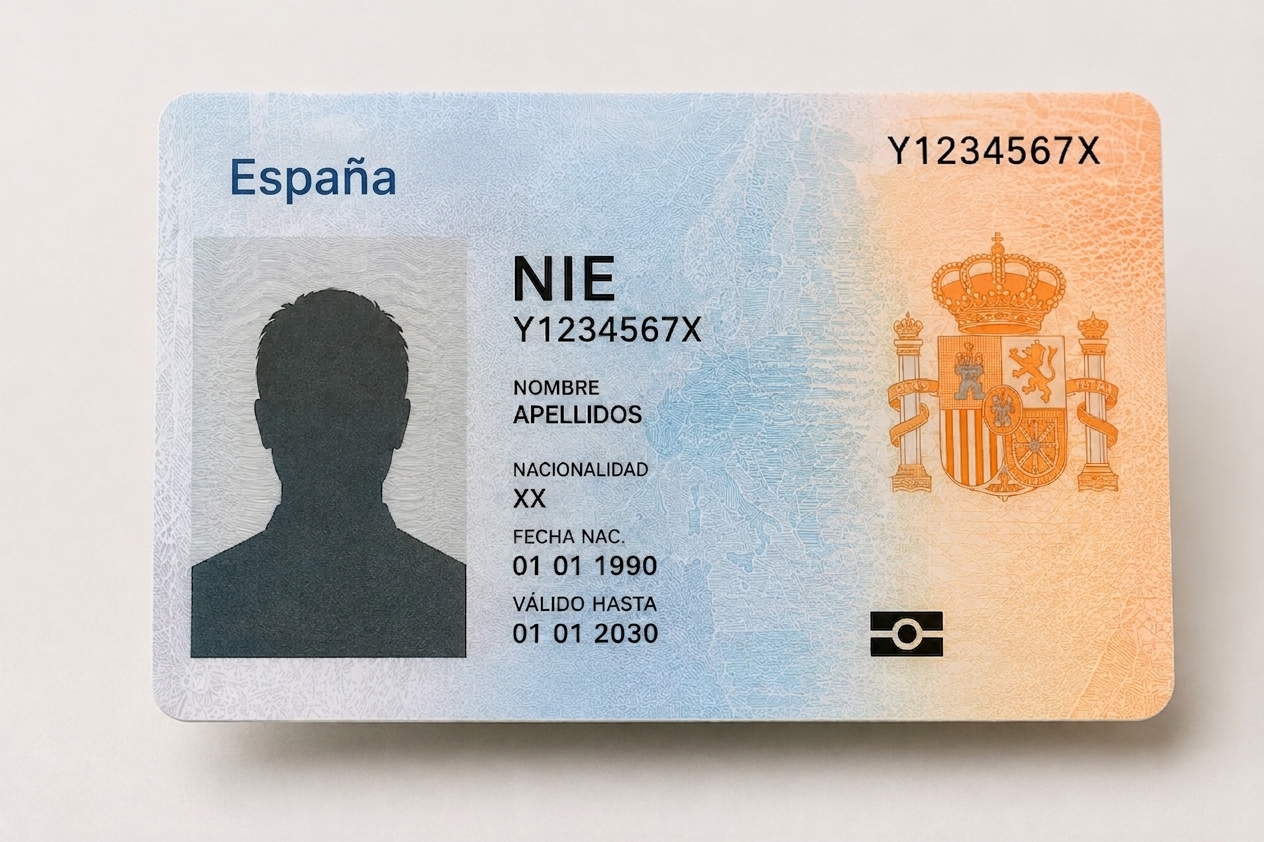
If you are buying a property in Spain, the NIE number is the very first piece of paperwork you need, and without it the purchase simply cannot complete. The notary will not sign the deed, you cannot pay the taxes, and the property cannot be registered in your name. The good news is that getting one is one of the easiest steps in the whole process, and you do not even need to be in Spain to do it. This guide explains what a NIE is and exactly what a non-resident buyer needs.
What is a NIE number?
NIE stands for Número de Identidad de Extranjero, the Foreigner Identification Number. It is a unique, personal number issued by the Spanish National Police (Dirección General de la Policía) that identifies you in all your dealings with Spanish institutions: notaries, banks, the tax office (Hacienda) and the Land Registry.
It is important to understand what a NIE is not:
- It is not a residence permit,
- It is not a visa or a right to live or work in Spain,
- It does not make you a Spanish tax resident.
It is simply the number Spain uses to identify you. You can hold a NIE for years without ever spending a night in the country. Many non-resident owners do exactly that.
Why do I need a NIE to buy property?
A foreign buyer needs a NIE for essentially every step that has legal or financial weight:
- To sign the final deed of purchase (escritura),
- To pay the transfer tax or VAT on the purchase,
- To register the property in your name at the Land Registry,
- To open a Spanish bank account (mandatory for non-residents)
- Later, to file your annual non-resident property taxes, which we cover in our guide to non-resident property tax and Modelo 210.
In short, no NIE means no purchase.
How to get an NIE Appointment
Through a Power of Attorney (in Spain or fully remote)
You do not have to attend at all. Using a power of attorney (poder notarial), your Spanish lawyer can apply for your NIE on your behalf, so you never have to queue at a police station or consulate. This is the route most of our remote buyers use, and it dovetails neatly with buying the whole property remotely. You sign the power of attorney before a notary at home (with an apostille) or at a Spanish consulate, and your lawyer handles the rest. We explain how a POA works in our guide to power of attorney in Spain.
How long does it take?
It varies by route, from a few days to a few weeks. we start your NIE application as soon possible, so it never becomes the thing holding up completion.
NIE, NIF, TIE, DNI: what’s the difference?
The terminology gets muddled even by people who should know better:
- NIE – the foreigner identification number itself (what a buyer needs).
- NIF – the tax identification number; for individuals it is effectively your NIE used for tax purposes.
- TIE – the physical residency card for long-stay residents; it contains a NIE but is a separate thing. Most property buyers never need one.
- DNI – the national identity document for Spanish citizens.
As a non-resident buyer, the NIE is the one that matters to you.
Frequently asked questions
Do I need a NIE to buy property in Spain? Yes. It is mandatory. You cannot sign the deed, pay the purchase taxes or register the property without one.
Can I get a NIE without going to Spain? Yes, have your lawyer apply on your behalf using a power of attorney, so you never need to attend in person.
Does a NIE make me a Spanish tax resident? No. A NIE is only an identification number. It does not affect your residence or tax-residence status, which depend on where you live and how long you spend in Spain.
How long is a NIE valid? Your NIE number itself is permanent and does not expire. Some non-resident NIE certificates carry a validity period for the paper document, but the number stays yours for life.
Get your NIE sorted before it holds up your purchase
We obtain NIE numbers for UK and Irish buyers every week, either when you visit or entirely remotely through a power of attorney, as part of your property purchase. Getting it done early keeps your completion on track.
Book a consultation or contact PALS in Puerto de Mazarrón and Alhama.

Antonio Legaz Morales
Antonio Legaz Morales is the founder and CEO of PALS Solicitors. A qualified Spanish lawyer, he is a registered member of the Ilustre Colegio de Abogados de Cartagena (Bar Association of Cartagena, Murcia), collegiate number 1106, and holds a law degree from the Universidad San Pablo-CEU in Madrid.
With more than 25 years in active legal practice, Antonio specialises in property conveyancing, Spanish tax, and inheritance and succession law for international clients on the Costa Cálida. He advises UK, Irish and other foreign nationals buying, selling and inheriting property across Puerto de Mazarrón, the Mar Menor and Condado de Alhama, guiding them through the Spanish legal and tax system in plain English.
View his professional profile on Legalia.